
The Darkness Before the Dawn

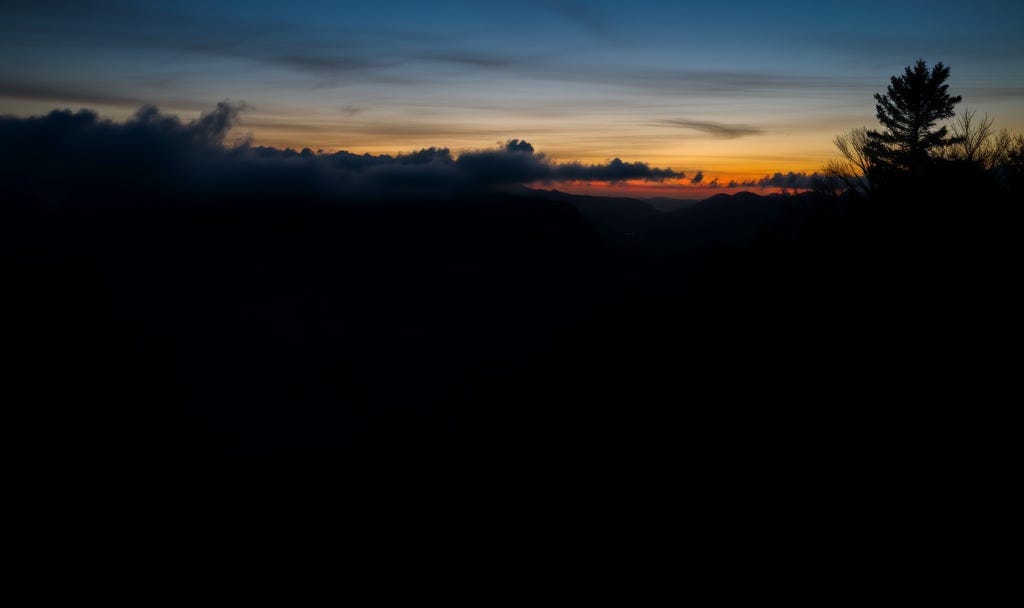
There’s a particular kind of dark that comes right before first light. Not the deep dark of midnight, which at least has the decency to feel settled. This is the other one. The thin, uncertain dark where you can’t quite tell if the sky is lightening or if you’re imagining it because you want it to be.
I think most of us know that dark far better in our lives than we do in the sky.
It’s the dark of the decision not yet made. The diagnosis not yet given. The conversation you know you have to have but haven’t found the words for. The version of yourself you can feel forming but can’t yet see clearly enough to trust.
We call it fear of the unknown, as if that explains it. As if naming it makes it smaller. It doesn’t, really. What we’re actually afraid of isn’t the unknown itself. It’s the thought we’re having about the unknown. The stories arriving thick and fast, each one dressed up as a prediction, each one utterly convinced of itself.
Here’s the thing I keep coming back to, in the work I do and in my own life. Thought moves. That’s all it does. It comes, it looks terrifyingly real for a moment, and then, if we let it, it moves on. The dark before dawn feels endless while you’re in it. But it was never actually still. It was always turning, always becoming something else, whether we could see it happening or not.
I’ve sat with people at their own version of that thin, grey hour. The moment before they leave a marriage, a job, a life that no longer fits. The moment before a body forces a reckoning nobody chose. What strikes me every time is this: the fear rarely comes from what’s actually happening. It comes from the mind’s frantic attempt to solve an unknown future using the only material it has, which is the past. And the past was never built to answer this particular question. It can’t. It’s not built for that job.
So the mind spins. Faster, louder, more certain of catastrophe the less it actually knows.
I don’t think the answer is to talk yourself out of the fear, or to arm yourself with enough certainty to hold it off. I’ve tried that route and it’s exhausting, and worse, it doesn’t work. What I’ve found instead, both in my own life and in the room with other people, is that something shifts the moment you stop needing to know. Not because you’ve solved anything. Because you’ve noticed that the fear was never actually about the dark. It was about the thinking you were doing in it.
There’s a strange kind of relief in that. You’re not being asked to be brave, exactly. You’re being asked to see clearly, for just a moment, that you’re standing in weather, not in truth. And weather passes. It always has.
I’ve had my own thin grey hours. The kind where the ground you thought was solid turns out to have been thought all along, and you’re left waiting to see what’s actually there underneath. Dawn doesn’t arrive because you worked it out. It arrives because that’s simply what dawn does, on its own schedule, in its own time, whether you were watching or not.
Maybe that’s the whole of it. Not manufacturing light out of sheer will, but trusting that the system you’re part of was never actually broken, even when it felt unbearably dark. The unknown isn’t the enemy. It’s just the part of the story that hasn’t been created yet.
It’s coming. It always does.
I have definitely experienced those moments probably more often than I care to admit. And yes how good the m release feels when you realise it’s just one of those crazy thoughts dressed up in a narrative of its own like a snowball down a hill growing and growing until suddenly it’s gone and you meet the true reality and smile - knowingly